Wired: “ Pagers, Pay Phones, and Dialup: How We Communicated on 9/11”

Most of us watched the same thing on that day, united in front of millions of televisions in a way that the nation perhaps hadn’t been since the days of the Kennedy assassination.

Yet part of the reason we all watched the same thing on TV was that, technologically speaking, we were living in a comparative dark age 18 years ago. Apple’s stock was $1.24 on September 10, and according to WIRED, one of the hot new gadgets was the Casio WQV3D-8 wristwatch.

https://www.wired.com/story/pagers-pay-phones-and-dialup-how-we-communicated-on-911/

Wallows

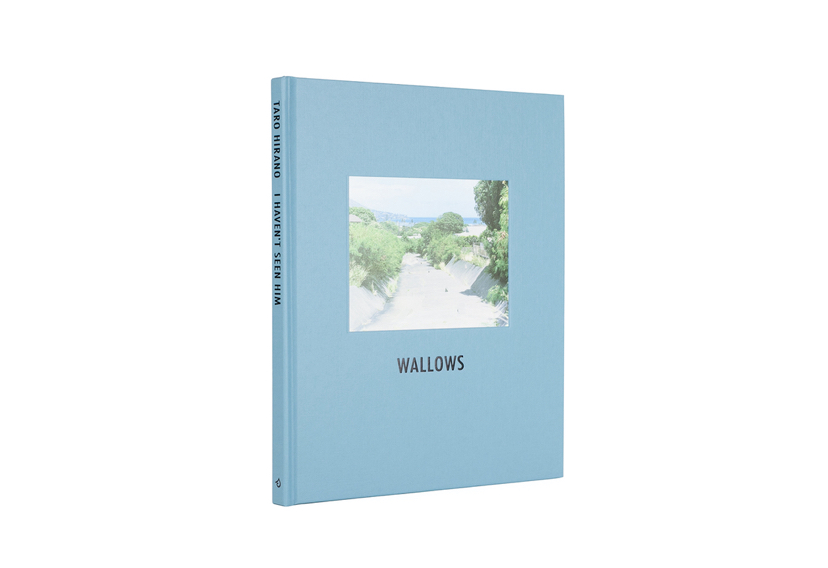
This photo book about the infamous “Wallows” ditches in Hawaii looks pretty cool:

The Wallows, one of the most iconic locations of 1980’s skateboard culture. The spot was featured in the beginning of the Bones Brigade’s 1987 video “The Search for Animal Chin,” in which Tony Hawk, Steve Caballero, Lance Mountain, Tommy Guerrero, Mike McGill, Rodney Mullen and Mike Vallely go in search of the mysterious (and fictional) skater legend Animal Chin – have you seen him?
Thirty years later, photographer Taro Hirano – himself a skater during the 1980s who was heavily influenced by the video – visited the location in Hawaii to capture it in photographs. His images focus on details and dirt, and record the legendary location from the eyes of someone able to see the magic and history of this drainage ditch.

https://www.shashasha.co/en/book/i-haven-t-seen-him

WP Dundee Meetup

I’m definitely a bit late to the party here but I finally made it along to the monthly WP Dundee Meetup, I heard about it earlier this year but between work, life etc I lost track of the meetup schedule.

Having worked with WordPress for over 10 years I’m aware that the community surrounding it is an extremely helpful one. Whether you’re writing a blog on wordpress.com, you use WordPress for your business website or you develop websites for yourself or other people then you’ll find a strong online community with the goal of helping people to use WordPress to the fullest.

Another strength of the WordPress community is that there are many regular informal face-to-face ‘meetup’ events and also larger WordCamps which are larger conference events with speakers discussing various topics of interest.

I’ve thought before about trying to get a local WordPress meetup going so it’s great that the WP Dundee Meetup is up and running, I’m keen to try and help it grow and increase the amount of people attending. So if you use WordPress in anyway, whether it’s for personal use, business, whatever then please consider taking the time to join the Meetup group, follow the @wpdundee twitter account and keep track of the schedule for monthly meetings (at the time of writing the next meetup is scheduled for Thursday Sept 26th).

I look forward to attending and meeting more people who enjoy using WordPress at future meetups!

QREATE???

QREATE? “What happened to ‘Suburbia’?”

You may notice things have changed a wee bit on my website, nothing major really but I decided to switch to another domain name that I’ve had for quite a few years. Whilst ‘suburbia.org.uk’ has been my website url for about 13 years I felt it was time to mix it up a little bit.

I’ve been experimenting more recently with trying to post some short-form content such as interesting links, videos etc, onto my site first and foremost and having this content share out to social media channels. I’ve only got it automated out to Twitter and Micro.blog at the moment but I’ll look into Facebook, Instagram etc as well.

Generally I’m just experimenting with sharing content here initially and trying to get back to writing and blogging a bit more. So hopefully there should be a bit more activity going on here on the site at the new url of qreate.co.uk :)

I’ve still got all of the same content as before so take a look around my Projects page to see some of the things I’ve been working on. I’m also going to add a bit more about some of the freelance work I’ve been doing recently, in particular working with Ryan and Lyall at Agency of None on several things for Dundee Design Festival which was particularly fun and interesting to work on.

A work-around for aspect-ratio percentage padding issues on flex items in older versions of Firefox and Edge

Whilst working on a recent project I needed to enforce a fixed ratio on some elements in the layout. In this case I used the ‘Aspect Ratio’ method which uses a ‘0’ height element with a percentage-based ‘padding-top’ value (More info about that in this CSS Tricks article).

The problem I ran into was that I was also using Flexbox for layout so each element was a Flex item, all of this was fine in Chrome and Safari and also in recent versions of Firefox and Microsoft Edge 17, 18 and in the upcoming 19.

But when testing in Edge 15 and 16 I found that the elements with the aspect ratio method applied to them were just completely invisible. Looking into it further I came across a Stackoverflow post and discovered that the issue was that in these versions of Edge they were supporting an earlier version of the Flexbox specification which meant that the percentage-based padding-top had no effect, basically rendering these elements with a ‘0’ height so they didn’t show up. It seems that the Flexbox specification was updated circa 2018 and basically brought it in line with the way Chrome and Safari have always behaved.

An alternative way of specifying the padding-top value is to use the ‘vw’ viewport-width units instead of percentages, whilst I found this did work to some extent it was harder to keep the ratios exactly how I wanted, but at least it was a way that would get these elements working in older version of Edge. Rather than having to completely redo my markup and CSS just to support these older browsers I wanted to see if there was a way to target only these earlier versions of Edge and use ‘vw’ units for Edge 15 & 16 but keep percentages for all other browsers.

As it happens I was also using “Variable Fonts” on this site which are only supported in Edge 17+, as such as I was already testing for Variable Font support by using ‘@supports (font-variation-settings: normal)’, so combining this with another parameter ‘(-ms-ime-align: auto)’ which allowed me to target Edge I came up with a workaround.

Here’s an example of how it would be used, in this case it is a 3-up layout so each element is 1/3rd of the page width so set at 33.33333% of the width and then a padding-top set to the same percentage. The first CSS block sets the main styles and the second block adds the ‘@supports’ check which overrides the first for matching Edge versions:

.aspect-block {
    padding: 0;
    position: relative;
    flex: 0 0 33.33333%;
    height: 0;
    overflow: hidden;
   padding-top: 33.33333%;
}
@supports (-ms-ime-align: auto) and (not (font-variation-settings: normal) ) {
    .aspect-block  {
        padding-top: 33.33333vw;
    }
}

“Vague but exciting.”

In 1989 I was just about to finish High School and start my post-secondary school education path. At that time I really didn’t have much of an idea about what I wanted to do, other than going skateboarding I was only really interested in art and design, so off to college to study art and design I went.

Elsewhere in the world in 1989 Tim Berners-Lee submitted a document called “Information Management: A Proposal”* which proposed a large hypertext database that enabled the sharing of information between multiple computers, and from this the World Wide Web was born.

A few years later in 1993 I got my first taste of the internet, cheekily using a friend’s login details at University! Initially I used Gopher to browse through archives of NASA space photos, but soon after came the release of NCSA Mosaic, the first popular web browser, and I started accessing this “new thing” called the World Wide Web.

In 1994 I started my first year at Art College which gave me legitimate access to the internet (without having to use a friend’s login details!). “View source” became my teacher, and I spent hours telnet-ing into the main web server and learning how to write HTML. I didn’t realise it at the time but these were skills that were going to lead me in a career trajectory for the next 2 or 3 decades up to the present time.

Anyway, all this is to say “Happy 30th Birthday” to the World Wide Web and thanks to Tim Berners-Lee for inventing it!

This NeXT workstation was used by Tim Berners-Lee to run the first ever web-server.

If you want to see what it was like to use the first web browser then go and check out the “CERN 2019 WorldWideWeb Rebuild” project which rebuilt the original browser running inside a modern browser (inception!):

https://worldwideweb.cern.ch

* The proposal elicited the “Vague but exciting” response from Tim’s boss, which sounds a bit how I saw my future in 1989 ;)