Why does UK hosting suck compared to the US? Part One

This is a bit of a rant really, I’m just wondering when are the US companies going to come and give the UK hosting scene the shake-up it needs?

If you use US based hosting you get the following advantages:

  • Cheaper prices
  • Much bigger bandwidth allocations
  • Much bigger diskspace allocations
  • All inclusive features
  • Great tech support (on the whole!)

My Hosting history

I started using a Fasthosts reseller account which I’ve now had for the last 6 years or so. It’s quite a good service, I can host as many accounts as I want, Windows or Linux, no bandwidth or disk space limitations. It’s a service that has been very useful. The downside to it is that I have to pay extra for features like Spam filtering or virus protection, these features are also enabled on a per mailbox basis so it get’s expensive very quickly for clients who have a lot of mailboxes. MySQL databases, Visitor Statistics, user control panels, password protected folders are all additional costs to have on a site too, so adding all these costs onto a site really mounts up. On the plus side though is that Fasthosts Tech Support is very good, they offer 24/7 support and they do the job very well. I’m always confident they’ll get any problems sorted very quickly. In addition to the Reseller Account I also have a Dedicated Server which I use to provide live audio and video streaming for a client and also to host some additional MySQL databases.

Too much, not enough…

Due to the high price of all the additional features on Fasthosts and also the inability (at that time anyway) to use Apache .htaccess files for mod_rewrite I had no choice but to get an additional hosting account elsewhere. I’ve used two different VPS accounts since then, the first with Designer Servers and the second with Webfusion.

The Designer Servers VPS was reliable but had an unrealistic and unusable diskspace allocation of 300Mb which for a reseller VPS was just way to small. In this age of GMail accounts approaching 3Gb it wasn’t enough. The cost involved in getting a more expensive account just wasn’t worth it.

I then switched to Webfusion as the price was a bit lower and had a much better disk space allocation of 10Gb. The VPS comes with a 100 domain Plesk Control Panel which is quite easy to use and provides a good interface for clients to use to manage their own email etc. It worked quite well until late last year (2006) when it started to run quite slowly, and despite my best efforts to optimise what’s running on it and moving most of the MySQL databases over to my Fasthosts Dedicated Server it’s still not running very well. It kind of feels like a Windows machine does when you know it’s time to reformat and get a clean install and start fresh. Only this is a linux server hosting several of my clients so there’s no way that’s an option.

What’s so good about the US hosts?

So that kind of brings me to where I am now, frustrated with having to deal with three separate hosting setups to get what I want. In the midst of this frustration I noticed a lot sites using US companies like MediaTemple for their hosting so I started to check out the US companies some more, and I was really surprised by what the features were.

I’ve already mentioned some major benefits in my previous bullet points, besides the cheaper prices and bigger diskspace and bandwidth allocations there is the actual technical setup of the hosting itself. There’s just nothing like it available based in the UK, not really for any price at the moment!

In the second part of this series of rants posts I’ll take a closer look at the following US hosting setups:

End of part 1

~Rick

Why the AppleTV isn’t such a new concept for Apple…

Although Apple have for some time had games available for the iPod many people have wondered if Apple would release games that would be playable on the Mac itself. Although not always considered the greatest gaming platform, due to the smaller amount of games available, the Mac has never the less had some great mainstream games available. But Apple has never developed any games itself for the Mac.
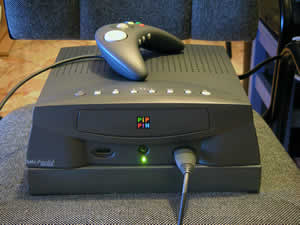
Picture of Apple's Pippin games consoleIf you’re new to the Mac platform you may not be aware that Apple has in fact dabbled in the gaming market before, just not for the Mac itself!

Apple actually developed a games console in the mid 1990s called ‘Pippin‘, it was intended to be a platform that they would license to third parties instead of releasing it themselves.

Unfortunately it wasn’t very successful due to the more powerful Playstation 1 and Nintendo 64 which were available at the time. Bandai were the only games company who licenced the Pippin and they only sold a few thousand units at the time.

It’s interesting that a licencing model was the goal for the Pippin as it was at this time that Apple also ran their first and only official Mac Clone program which allowed other companies to develop and sell their own hardware which was capable of running the Mac OS.

Another interesting thing about the Pippin is that it ran a cut down version of Mac OS as it’s operating system, if you’re familiar with the buzz around Apple’s latest release the AppleTV and the upcoming iPhone then you’ll know that they both1 run essentially a cut-down version of Mac OSX.

The AppleTV – Mk I?

Picture ofthe Apple Interactive Television BoxAnother perhaps little known fact is that Apple have also developed a prototype set-top box for delivering interactive TV once before. Simply known as the ‘Apple Interactive Television Box‘ this device preceded the Pippin by 1 or 2 years, it was never actually released for sale though and was cancelled at a very late stage of development.

Although far from having the capabilities of the AppleTV it does show that Apple have had a long standing interest in becoming part of the home entertainment ecosystem within people’s houses.

It was likely that this unit was intended to deliver content via the cable providers of the time such as standard TV shows but allowing play and pause functionality. The intention was also to provide interactive content in the form of quiz shows and educational content.

The seeds of an idea, but not time for harvest

Both of these concepts had some interesting ideas at the core, but due to bad timing they never amounted to anything. It’s interesting to note that both of these concepts were developed during the period in Apple’s history when Steve Jobs was not in the company, whether these concepts would have been developed under Steve Jobs’ leading is hard to say, but the previously mentioned Mac Clones program was swiftly closed down upon his return to the company in late 1997. I think it likely the Pippin and Interactive Television Box would not have seen the light of day.
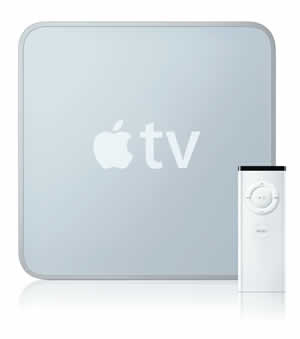
Picture of AppleTVAppleTV: Game on

Since the announcement of the AppleTV there has been a lot of speculation as to its capabilities, did it have some hidden functions that hadn’t been announced at the time? The possibility of additional functionality seemed likely and it didn’t take long after the release of iTunes 7.1 before people had a snoop around in the resources of the software to look for clues to any hidden purposes for the AppleTV.

Inside the software there are strings of text used to display the various messages and alerts shown whilst using the software, interestingly amongst these strings are these:

“4309.161” = “Are you sure you want to sync games? All existing games on the Apple TV ?^1? will be replaced with games from this iTunes library.”;”
4309.162″ = “Are you sure you do not want to sync games? All existing games on the Apple TV ?^1? will be removed.”;

The presence of these strings clearly shows that at the very least some of the games available for the iPod will also be playable on the AppleTV. How much more sophisticated the games available will be remains to be seen, when you consider the possible input device(s) that could be used with the device then there’s no reason why these games have to be as simple as the iPod games. There’s a whole range of ports on the AppleTV including the USB port which so far Apple has said is purely there for ‘maintenance purposes’.

In an interview on Wired.com, Greg Canessa – the Vice-President of PopCap games – specifically mentioned the AppleTV as one of the target platforms for their development:

It will be about taking the stable of franchises and games out of PopCap’s studio and adapting, customizing it for different platforms — adding multiplayer, new play modes, HD, customizing the user interface and display for Zune, ipod, Apple TV, Nintendo DS, PSP.

Notably missing perhaps from that list is the Nintendo Wii console, whether this is intentional or not is hard to say but given the runaway success of the Wii despite it not being as powerful as it’s contemporaries the Playstation 3 and XBox 360 shows that gameplay is not all about raw power. The AppleTV may not have the raw power of the XBox or Playstation but it may offer something close to the capabilities of the Wii, or perhaps even more given the Wii’s lack of HD playback capabilities.

Ripening opportunity2

Great design and application is something that Nintendo and Apple both share, it may be that Apple are looking to take advantage of the increase in popularity of the casual gaming market that Nintendo have cornered so well and to take a slice of that for themselves. The old ideas of the Pippin and the Interactive Television Box look like they have re-emerged from the ashes to a far more opportune time.

~Rick

1: The iPhone definitely runs OSX, the AppleTV is rumoured to do so and it seems very likely that this is the case.

2: Sorry, this post was full of Apple related puns, not all of them intentional originally!

I don’t know who I’m annoyed with most, Virgin Media or Sky…

Recently Virgin Media and Sky have been having an ongoing disagreement about the amount that Sky want to charge Virgin Media for receiving the standard Sky TV channels such as Sky One, Sky Two etc. It’s basically now come to a head and Virgin have refused to pay what they perceive as the excessive amount that Sky want to charge for these channels. As of midnight on the 28th of February, Sky’s basic channels stopped airing on Virgin Media.

Between a rock and a hard place…

I’ve been aware of this impending stalemate over the last few weeks. From my point of view as a consumer I feel like I’ve been used like a pawn in a big power game. On one side there were the ads on the Sky channels saying that Virgin Media (or Telewest/NTL as they were still known at the time) were threatening to allow the removal of all Sky channels, they were asking for people to call and petition Virgin Media not to get rid of the channels. On the other side there was Virgin Media saying that they want ‘Fair play’ and that the reason these channels have gone is because Sky wanted too much money for these channels.

Now, I’ve no doubt that Sky by doubling the amount of money they wanted for these channels was imposing a pretty big price hike, no one likes raises in prices. However, there’s one very big, important fact that Virgin seem to have overlooked here:

The Sky channels were one of the few that actually contained anything worthwhile watching. Period. End of story.

I’m of course not including the standard terrestrial channels here, BBC etc. If you’re not familiar with the offerings on Cable TV then perhaps these lyrics of the Bruce Springsteen song (n.b. I’m not a Springsteen fan, I just remembered this song and thought it appropriate) will help:

“Man came by to hook up my cable TV
We settled in for the night my baby and me
We switched ’round and ’round ’til half-past dawn
There was fifty-seven channels and nothin’ on…”

Basically most of it is just rubbish, really terrible rubbish, repeated frequently. If you’ve got 57 channels of mostly rubbish and you take away the ones that are at least half decent, what do you have left? Not much of value.

Virgin Media, why the free TV then?

What I can’t understand is that Virgin Media actually offer a free TV package, as long as you have broadband and phone then you can get a basic package for free. I basically have this free TV package as the only other non-standard terrestrial channel on it that I watch was included with this package. Which channel was that? Sky One. And what was so special about Sky One? It is the channel that is now showing Series 3 of Lost, 24 as well as Battlestar Galactica and the Simpsons!

I think that Virgin are grossly undervaluing two things here: the value of these programmes to their customers, and the value of their customers themselves. These four shows above represent some of the most sought after shows on TV, regardless of the channel. They’re just pretty hot property in many people’s eyes. I think this is what Sky realises and this is what they’re wanting to be paid for.

All is not Lost?

Forgive the bad pun. Sky plan to drop their basic channels from the terrestrial Freeview service as well, but with this there’s a faint glimmer of hope as the end of the article talks about Sky’s plans to potentially offer subscription channels over Freeview from this Summer. Although there is no indication as to whether they would include Sky One and the aforementioned shows at all. There’s only one problem with that for me. I can’t get Freeview where I live, despite it being a highly populated area. Don’t get me started on that issue either! It’s one of the other reasons I went with Virgin in the first place as I had no other choice, it was either them or Sky, and at the time they were cheaper!

End of Transmission

There’s an article on the BBC News website ‘BSkyB channels taken off Virgin’ where another Virgin user echoes my own thoughts:

…I’m really angry about the whole situation. I signed up with NTL for the package, largely based on Sky One because I’m a big fan of all the American shows…

That kind of sums it up, I signed up for the service based on the shows I could get, I wanted to get the various channels I couldn’t get for free due to the lack of Freeview coverage and there was the added channels such as Sky One that were of interest. Since Sky picked up Lost Series 3 instead of Channel 4 it just made it all the more an essential channel for me to watch.

Virgin Media, I’m afraid I think you’ve underestimated the value of these shows to your customers. I think this is now a dealbreaker since Sky are offering a good deal, and I’m probably going to take them up on it.

End of rant.

~Rick

TechCrunch’s Michael Arrington calls for an end to the BBC

Michael Arrington of Techcrunch.com recently came out with the bold statement that “the BBC should be dissolved“. The BBC’s Backstage Blog has a bit more information. He was taking part in a panel debate, ‘European start-up culture: playing catch-up to the US?’ at the Future of Web Apps conference on 22nd of February in London. He claimed that the BBC’s activities were harmful to the startup culture in the UK, he specifically mentioned a project called ‘CBBC World’. His opinion was that the BBC launching CBBC World was harming the efforts of at least three startup companies trying to get into the virtual world space, that the BBC is basically anti-competitive to the open market due to being funded by the licence fee.

He loves me, he loves me not…

There was an article published on Techcrunch.com by Michael Arrington in January titled ‘BBC Announces?What?‘ which was all about the CBBC World project. Interestingly he opened the article saying “As much as I love the BBC…“, which is a link to the ‘CrunchNotes’ blog discussing the Top 11 sources of referral traffic to Techcrunch.com. The article gives the initial impression that he’s a big fan of the BBC. However, with the BBC being the 5th largest source of referrals I think he’s perhaps more a fan of the BBC due to the high amount of traffic (or ad revenue!) brought in by the BBC! ;) His comments at the Future of Web Apps seem to indicate that he doesn’t love the BBC at all!

The fee keeps it free (of ads!)

I’m definitely a supporter of the BBC, I support the licence fee model, the TV production output and the value I get for it, more specifically I like the commercial free environment it provides. I left a comment on the ‘BBC Announces…What?’ article at the time:

My experience of US / Canadian broadcasting is a huge quantity of channels but dreadful quality, the same is true of what?s available on the Cable and Satellite channels here in the UK. I just yesterday cancelled my full TV package that I have with Telewest primarily due to the poor quality of shows and endless repeats (and they thought it was ok to ?increase? the price for that?!!).

The BBC channels give much better programming than the commercial channels. Speaking as a parent of a 4 year old, the CBeebies channel is excellent as my 4 year old is not barraged with adverts every 10 minutes like it tends to be on the commercial channels.

I hold really strongly to that, the commercial channels just have a whole other feel to them, they may be ‘free’ but the exposure to all the adverts, including all the constant breaks is a bad user experience to put it mildly!

Ok, I know the context Michael Arrington was speaking was more related to online web application development perhaps more than traditional TV programming, however, I still think the whole ethos of the BBC is a positive thing.

Clarifying a few points

The BBC’s Backstage Blog writes that some points of clarification were made to Michael Arrington afterwards, namely:

  • CBBC World is actually created by an independent company and not the BBC, so the BBC is actually supporting external developers. (Apparently CBBC World is based on this: ‘KetnetKick‘)
  • Everything the BBC does must pass the public value test and is therefore assessed for it’s potential commercial impact.

The BBC’s remit is that at least 25% of production of their New Media (web & online) content has to be provided by external companies. The BBC are actually a great source of opportunity for many external companies rather than being a competitor. Additionally, the remit of working with external companies is something that is spreading through all areas of production, not just New Media. It’s a big cultural change that is spreading through the BBC.

Taking a good look around the BBC Backstage website also shows a great deal of interesting innovation going based around open standards. The ‘More about BBC Backstage‘ page states:

backstage.bbc.co.uk attempts to encourage and support those who have provided most of the innovation on the internet – the passionate, highly-skilled & public-spirited developers and designers many of whom volunteer their time and effort.

In the past the BBC has not always encouraged such “amateur innovators”, however public-spirited their intentions and products. backstage.bbc.co.uk aims to foster a newly constructive and open dialogue with the wider development community using BBC content and tools to deliver public value.

So I think Michael Arrington perhaps needs to do a bit more research!

Pageing Mr Arrington…

The Backstage Blog also writes that they would like to discuss his comments with them:

We would publicly love to invite Michael Arrington to come in, talk with people and for us to talk about some of his comments, as its obvious he has the wrong end of the stick.

In light of the ignorance of the BBC that Michael Arrington has shown with his statement I hope that he’ll take the opportunity to do so, I look forward to reading the TechCrunch article all about it ;)

[Incidentally, where is the TechCrunch article all about the BBC iPlayer plans? I’m surprised there’s not been anything written about this on TechCrunch.]

Related links:

~Rick

PureTracks.com to go DRM free – tipping the balance? [updated]

With all the recent hubbub about DRM and downloadable Music tracks it has perhaps comes across as purely rhetoric by a lot of the record labels.

Some people have called into question Steve Jobs’ motives over the whole ‘Thoughts on Music’ letter as being simply a smokescreen to deflect the grumblings within various European companies.

Whatever your opinion on the matter there is some positive movements happening within the Music download industry, money being put where their mouth is so to speak.

PureTracks.

iPodObserver.com reports that Puretracks.com has announced the removal of DRM from their music files, starting with the Independent labels and adding more DRM-free tracks as time goes on.

Interestingly PureTracks previously used Windows DRM for their files which means the tracks would have been in Windows Media Audio format files, this move indicates that it will make use of pure MP3 format files as PureTracks have indicated that the will work on iPods. It does appear there will be a mix of both DRM’ed and DRM-free tracks available depending on the Record Label’s preference.

If PureTracks can mix it up, why not iTunes?

I’m playing devils advocate here I guess but I’m wondering if there’s no way that the iTunes Store couldn’t offer a mix of track types? My original thought is that Apple would prefer to keep the user experience simple, so offering some tracks with DRM and some without would be a bit confusing for the user. However, John Gruber of DaringFireball.net wrote an interesting article “Would Apple Mix DRM and Non-DRM Music at the iTunes Store?” which has some interesting points. Maybe there’s scope for a mixture after all?

Update: A couple of interesting links…

Rick Moynihan left a comment pointing to an article by Cory Doctorow regarding Steve Job’s call for removal of DRM from music tracks. I also came across an interesting article on the LA Times website which gives another interesting perspective on the call for removal of DRM, both definitely worth reading.

~Rick

Another way to let your voice be heard about the BBC iPlayer proposal

There’s another way to let your voice be heard about the BBC’s iPlayer plans, I’ve previously written a few posts about this whole issue and linked to the BBC Trust’s Open Consultation. If you’ve not looked at this already then have a look here:

Now tell Tony Blair!

The other way to let your voice be heard is to sign the online petition over on the 10 Downing Street website, the petition summary is:

We the undersigned petition the Prime Minister to prevent the BBC from making its iPlayer on-demand television service available to Windows users only, and instruct the corporation to provide its service for other operating systems also.

Further details specfied by the creator of the petition are:

The BBC plans to launch an on-demand tv service which uses software that will only be available to Windows users. The BBC should not be allowed to show commercial bias in this way, or to exclude certain groups of the population from using its services. The BBC say that they provide ‘services for everyone, free of commercial interests and political bias’. Locking the new service’s users into Microsoft Windows whilst ignoring those members of society who use other operating systems should does not fit in with the BBC’s ethos and should not be allowed.

The petition is found here:

~Rick

Interesting articles about DRM on Engadget.com

There’s a couple of interesting articles about DRM on Engadget.com. The first :’DRM: The state of disrepair‘ mentions a few of the various views voiced since Steve Jobs’ ‘Thoughts on Music’ post on Apple.com. A really interesting part is a table showing the state of DRM on various physical and digital media.

Chart displaying 'the state of disrepair' of Digital Rights Management schemes

The second article: ‘Microsoft announces another new DRM: PlayReady‘ is about a new DRM scheme introduced by Microsoft which is intended for the mobile device market. It’s intended to bring DRM capabilities not just for their own formats but for other codecs as well such as H.264 or AAC.

So much for Bill Gates’ perspective that DRM has “huge problems“!

~Rick

Windows Vista: Beneath Aero’s transparency hides some future ‘surprises’

It’s well known that Microsoft were way behind schedule with the launch of Windows Vista. The problems with security in Windows XP required Service Pack 2 to be developed which took a huge development effort for Microsoft and slowed development of ‘Longhorn’ (Windows Vista’s development codename). These delays meant that features were dropped by the wayside in order to get it launched. Two features in particular that were apparently dropped were:

  • WinFS – Windows Future Storage
  • NGSCB – Next-Generation Secure Computing Base (formerly Palladium)

WinFS – Windows Future Storage

WinFS is described on Wikipedia as:

…a data storage and management system based on relational databases, developed by Microsoft and first demonstrated in 2003 as an advanced storage subsystem for the Microsoft Windows operating system.
When introduced at the 2003 Professional Developers Conference, WinFS was billed a pillar of the “Longhorn” wave of technologies.

So, an interesting feature dropped for the time being perhaps and one that may be added in a future version of Windows or an interim update.

NGSCB – Next-Generation Secure Computing Base

Wikipedia describes NGSCB as:

…a software architecture designed by Microsoft which is expected to implement parts of the controversial “Trusted Computing” concept on future versions of the Microsoft Windows operating system. NGSCB is part of Microsoft’s Trustworthy Computing initiative. Microsoft’s stated aim for NGSCB is to increase the security and privacy of computer users…

Interestingly if you read through the Wikipedia entry for Windows Vista it talks about how both of these features were dropped:

Faced with ongoing delays and concerns about feature creep, Microsoft announced on August 27, 2004 that it was making significant changes. “Longhorn” development basically started afresh, building on the Windows Server 2003 codebase, and re-incorporating only the features that would be intended for an actual operating system release. Some previously announced features, such as WinFS and NGSCB, were dropped or postponed, and a new software development methodology called the “Security Development Lifecycle” was incorporated in an effort to address concerns with the security of the Windows codebase.

So, on that page it does talk about NGSCB being dropped from Vista, however, back on the NGSCB page under the heading ‘Availability’ it states:

When originally announced, NGSCB was expected to be part of the then next major version of the Windows Operating System, Windows Vista (then known as Longhorn). However, in May 2004, Microsoft was reported to have shelved the NGSCB project [12]. This was quickly denied by Microsoft who released a press release stating that they were instead “revisiting” their plans.

The interesting point is that Microsoft denied it, and for good reason. An important part of the NGSCB, or ‘Palladium’, initiative is alive and well and active in Windows Vista. Known as Protected Media Path or Protected Video Path it is a technology present in Vista that is intended to provide a protected environment for viewing content on PCs. The technology basically provides encryption throughout the hardware components of the system, this prevents any other software or hardware outputs on the system being used to copy the content being viewed, played or read etc. It determines whether the components in a PC can be trusted to play back the content without risking it being copied, hence the other term used in relation to the NGSCB initiative, Trustworthy or Trusted Computing.

WinFS and XP Service Pack 2 were not the only things delaying Vista’s launch

Vista’s original WinFS feature and the development of Windows XP Service Pack 2 might have contributed to delays in the development of Vista, but the inclusion of the Trusted Computing technology surely contributed to a major aspect of the entire codebase of the operating system. It really has been built from the ground up to provide Trusted Platform, a protected, or Digital Rights Managed environment that neatly fits the demands of Hollywood and future digital content such as Blu-ray and HD-DVD disk formats.

What’s ‘Hollywood’ got to do with it?

Everything. Trusted Computing is all to do with protecting or preventing content from being copied that the originators or copyright owners don’t want you to copy. Hollywood, used here as a generic term to represent the movie, tv and large media industries, are driving the whole initiative.

The music industry was caught completely unaware by the digital revolution, the unprotected CD audio format meant it was very easy for people to copy CD’s onto their computer’s hard drive. Couple this with a complete lack of forward thinking by the music industry or provision of easy ways to buy audio tracks online and the end result is a huge surge in file sharing. The Music industry have tried hard to patch up the leaking dam but it has been largely fruitless, the advent of Apple’s iTunes Store brought a great legal alternative but this still didn’t stop overall music sales declining. However, the music industry is still by and large convinced that piracy is the root cause of this decline.

Hollywood, on the other hand, weren’t quite so unaware. VHS movies and DVD disks have come with copy protection methods form quite sometime. the problem was that they could be easily circumvented and it’s not a difficult task to copy a DVD onto your hard disk with any number of freely available pieces of software. So, despite these attempts to protect copying, they have been unsuccessful. What Hollywood were worried about was the possibility that the new Hi-Definition formats such as Blu-ray and HD-DVD would be as easily copied. So in order to prevent this copying we are now entering the era of Trusted Computing, and Hollywood have their hopes pinned on it.

How does Trusted Computing affect me?

Blu-ray and HD-DVD disks will only play at full quality if the equipment it is being played on is guaranteed as a trusted platform, if not you are either going to get a lower-quality version of the content on the disk or perhaps find it can’t be played at all. The reason it may not play back at full quality could be caused by any number of factors in your system, your graphics card, your monitor or your soundcard could be considered ‘untrustworthy’ and therefore limit the experience of content that you have paid for the privilege of watching.

The only way of being sure that you can see the content at full quality is by making sure the components are running software drivers that are certified as trusted by Microsoft, as such upgrading components may be necessary to achieve this. Upgrading to Vista may suddenly seem an even more costly move. Additionally, the demands placed on the system in order to do the additional checks on the various sub-system components add to the overhead placed on the system, it’s not really surprising that Vista requires new hardware in order to run well.
Also, requiring people to upgrade older computers to new ones containing hardware that "plays for sure" with Vista is a great way to make sure all of the pieces of the DRM puzzle fall into place for Microsoft and content producers such as the movie industry.

Your PC may be Vista compatible, but is it Trustworthy?

Your current PC or even your brand new PC may be Vista compatible now, but once the use of Blu-ray, HD-DVD and other forms of Hi-Definition digital content replaces DVDs and becomes the norm will it meet the requirements necessary to be viewed as trusted?

You might just find that you’re suddenly locked out of what you’ve legally purchased until you go and buy the necessary upgrades!

Not just your PC either…

It’s worth noting too that it’s not just PC’s that are affected by this notion of Trustworthiness, all of the new wave of HD TV’s and Blu-ray or HD-DVD players support a similiar system of copy protection that is built into the very hardware itself. If you’re TV is not considered trustworthy you may find the content does not play back at full quality.

That shiny new HD-ready TV you just bought probably provides the same hidden surprise ‘features’ that are lurking behind the transparent clouds of Windows Vista.

Further reading

~Rick

Flash: Can it be a viable alternative to Windows Media DRM for the BBC? [updated]

This post continues my ongoing theme of the last few posts which is in response to the issues raised by the BBC choosing to use Digital Rights Managed Microsoft Windows Media format for their new iPlayer initiative. Please read the previous post ‘Dear BBC…‘ for more background information about it.

Where are the alternative formats?

I wrote in my last post about trying to find alternative formats to use instead of Windows Media DRM that could be used to deliver the BBC iPlayer initiative, I didn’t find any real solutions that could compete. I’ve been looking into it a bit more and I still don’t think I’ve found anything. One thing that comes to mind when thinking about video on the web these days is of course Flash video, sites like YouTube and Google Video have meant a huge upturn in the amount of Flash based video content available. What’s more it’s also incredibly easy for people to get it into Flash format thanks to these sites.

Why not use Flash Video for the iPlayer?

If Flash video is so popular then why doesn’t the BBC use Flash for the iPlayer initiative? A good question, and I’ve found a few answers that give some explanation to the reason. I found a post on the FlashComGuru.com website entitled “‘Why we don’t use Flash (video)’ – The BBC speaks up“, the article and the comments left by various people make for interesting reading. This article in turn references a response from the Editor of the BBC News website Steve Herrman regarding changes to the way audio / video is used in the BBC News website. FlashComGuru highlights that the overwhelming reason not to use Flash for video is simply the cost implications of shifting over to a whole new format and delivery method, particularly due to the invested use of RealPlayer format content.

The reponse from Steve Herrman titled “In response to site changes” contains a technical response as to why they don’t use Flash, one reason is:

“The BBC is trying to make its video available to the widest possible audience. This means that when we choose the formats in which to stream our audio and video clips and live programmes, we have to take account of: All the operating systems in use, and the number of people who use them (this is not just desktop operating systems – we need to take account of mobiles too); whether a player is available for that format on a particular operating system; and whether it is easy to play that video on an operating system.”

These are all good intentions obviously, the BBC has a remit where it has to be available to the widest possible audience and this is clearly stated in the first sentence. However, taken in the context of the iPlayer initiative which locks you into Windows Media DRM format and excludes Mac OSX and Linux OS users then this is obviously not the widest possible audience being catered for! Admittedly the article this quote from is specifically talking about the use of RealPlayer and Windows Media format on the BBC News website, but the remit there is the same as for the rest of the BBC.

So ultimately it is an issue of it being too costly to replace all of the existing infrastructure with a Flash based system due to the previous investment in the RealPlayer over the last 10 years. Now I can appreciate that, obviously the BBC don’t want to go wasting the investment previously made, plus they could be perhaps criticised for wasting Licence payers money too. However, why get into a relationship with Microsoft on this? There’s really no likelyhood that they will ever do much to help the fact that DRM’ed Windows Media content can’t be played on Mac OSX or Linux. I can’t see how this represents any kind of good investment of my Licence fee?

Surely there must be an alternative?

I keep coming back to that question, however, I can’t really find any viable alternatives. However, that is not a reason to let the BBC of the hook here. The best thing I can possibly think of is that this is time for Adobe to step up and take on Microsoft in this area, there’s a long game afoot here which Microsoft are pushing with the BBC. If the BBC can’t just dump the investment into RealPlayer technology overnight then how is it going to be any easier to dump investment into the Windows Media format and it’s DRM?

Calling Adobe! Time to get ‘mobile’…

There are obviously big issues going on here, advocating one commercial companies format over another isn’t necessarily the answer. For some this definitely isn’t the answer, especially with the use of DRM within the files. However, despite the prospect of perhaps seeing music available for purchase DRM free, I don’t think we’ll be seeing this happening as easily or so quickly where video is concerned. With that said I think the best option here is for Adobe to get the Flash video format positioned much better as a viable format to compete Windows Media DRM’ed content.

The previous quote from the BBC above mentions the use of Mobile devices as a target end user of the BBC’s content, yet again Windows Media is no solution here at all either with or without DRM. The point is interesting though because Adobe have just made an announcement at the annual 3GSM conference that version 3 of their Flash Lite mobile platform will support Flash video. This provides a vital piece of the puzzle that the BBC is trying to piece together, and a much more platform friendly method at that.

I think the only technical challenge left to fill in is the provision of a decent DRM scheme to use within Flash video, if Adobe can provide that piece of the puzzle then there’s absolutely no reason for the BBC to use Windows Media DRM and cause thousands of licence payers to be locked out of using a service they are entitled to use.

So, Dear BBC, time to think again…

If…

  • Flash format can work for other TV channels such as ABC around the world,
  • a growing amount of people use non-Microsoft operating systems on their computers,
  • more and more people are looking to access content online via mobile devices

then how can you consider Windows Media DRM a viable solution that is compatible with the remit of the BBC?

Update:

Bruce Schneier has written a great article about the DRM restrictions in Windows Vista, more reasons why a lock-in to Microsoft DRM is a bad choice for the BBC: [Via DaringFireball]

This isn’t even about Microsoft satisfying its Hollywood customers at the expense of those of us paying for the privilege of using Vista. This is about the overwhelming majority of honest users and who owns the distribution channels to them. And while it may have started as a partnership, in the end Microsoft is going to end up locking the movie companies into selling content in its proprietary formats.

I think you can replace the words movie companies at the end there with BBC instead. Microsoft desperately wants to have control of the DRM used in TV / Movie / Video distribution, the control they never managed to gain in the Music industry.

Vista: the longest suicide note in history

There’s an interesting article by Peter Guttman I just saw a link to: A Cost Analysis of Windows Vista Content Protection. It gives a lot of indepth information about Vista’s Content Protection, it’s quite scary reading, the heading above kind of sums it up.

~Rick

Open doors, not closed Windows?

This post is a bit of a follow-up to my last post ‘Dear BBC…‘ regarding the BBC’s new iPlayer proposal which is going to use Windows Media DRM to deliver the files. This is basically just a few thoughts / ponderings based on things I’ve been reading related to this whole issue.

Windows Media DRM, is it the only solution to the iPlayer requirements?

I’ve been looking around a little bit to see if there are any alternatives to using Windows Media DRM (I’m going to refer to this as WMDRM for short herein) for delivering the media that the BBC want to make available. The main reason that WMDRM has been chosen is that it is apparently the only form of DRM that will provide the means for the content to time out at the appropriate point. The BBC’s proposal suggests that programmes will be available to download for up to seven days after original broadcast but that the files will be valid for up to thirty days after downloading.

Now what I wondered is whether WMDRM really is the only option available for delivering this kind of time-sensitive protection, so far though I haven’t really found an alternative DRM. I have heard rumours that Apple’s FairPlay DRM has this kind of development in the pipeline though, the more I think about it I reckon Apple already has something like this working. However, given that Apple’s model of selling content on the iTunes Store is purely for outright purchase rather than ‘renting’ content coupled with the fact that Apple don’t currently licence their DRM to anyone else there is no need for Apple to implement this kind of model in practice. But I’m pretty sure they’ve got this kind of function written into FairPlay if / when they want to use it.

A couple of points of possible interest for alternative DRMs I found are:

  • Real Networks Helix – Real Helix platform (of note is that Real for a while managed to reverse engineer Apple’s FairPlay and offered the only online music store that could deliver Music using their own format as well as DRM’ed Windows Media and FairPlay’ed DRM tracks for use on iPods, however Apple put a stop to that functionality in various software updates, plus Real generally got slated for their accompanying PR campaign.)
  • OpenIPMP – Described as ‘Open source DRM for MPEG-4 and MPEG-2 adhering to ISO/MPEG IPMP open standards (MPEG IPMP Hooks and IPMP-X), ISMAcryp and OMA DRM 2 specs. Includes CA, PKI, DOI mgmt, ISMA streaming, license server, encoding/encryption, player, plugin architecture, etc‘.

The only good DRM is NO DRM?

Perhaps a better option is to not use DRM at all? A growing number of companies, organisations and people seem to think so. About a year ago the British Library expressed concern about the impact DRM has on their ability to ensure long-term access to copyrighted content, part of the British Library’s role is to catalogue everything published in the UK. DRM makes this difficult or impossible and getting round it, perhaps, illegal.

At the recent Midem music trade fair in Cannes the topic of selling music without DRM was discussed, perhaps this shows a turning of the tide by the Labels considering DRM-free distribution as the way forward. EMI has already experimented with DRM free music sales through Yahoo Music using raw MP3 format audio files.

There are perhaps several reasons why the Record Labels may be interested in selling tracks without DRM, one of which is the Labels’ desire to have better control over the music market, something that DRM stops them from doing. Another reason is that some Labels seem to perceive the iTunes Store market dominance as some kind of monopoly hold over the labels, this is true to the extent that Steve Jobs has resisted the Label’s demands for a different pricing structure based on popularity of tracks rather than the standard $0.99 / £0.79 per track model used by iTunes and many other online music stores. There are growing calls from European countries for Apple to open up their FairPlay DRM to licensing, Norway being the most recent country to rule that the FairPlay DRM terms and conditions violates local laws.

I’ve heard and read people say that Apple want to keep FairPlay DRM in place without licensing as it ensures their iPod hardware and iTunes Store sales continue to be successful. However, I’ve always felt that FairPlay DRM’s restrictions are about the least restrictive out there, couple this with Steve Jobs resistance to the Record Labels’ attempts to place further restrictions (albeit with some compromise regarding CD burning) and it’s never appeared to me that Apple would enforce DRM if they had a choice, they did promote the ‘Rip, Mix and Burn’ meme after all!

Joking aside though, my feeling on this seems to be confirmed by an article by Steve Jobs posted on Apple.com on 6th February entitled ‘Thoughts on Music’. The article contains a lot of interesting bits of information, it gives a background to how we got to the current state we are in regarding DRM and music. Steve also proposes three possible ways forward regading selling music online:

  1. Continue with the way things are with multiple competing DRM schemes.
  2. Apple to open up FairPlay DRM.
  3. Abolish DRM entirely.

Steve gives a good explanation of what is involved for options 1 & 2, however, the third option is the most interesting:

The third alternative is to abolish DRMs entirely. Imagine a world where every online store sells DRM-free music encoded in open licensable formats. In such a world, any player can play music purchased from any store, and any store can sell music which is playable on all players. This is clearly the best alternative for consumers, and Apple would embrace it in a heartbeat. If the big four music companies would license Apple their music without the requirement that it be protected with a DRM, we would switch to selling only DRM-free music on our iTunes store. Every iPod ever made will play this DRM-free music.

Why would the big four music companies agree to let Apple and others distribute their music without using DRM systems to protect it? The simplest answer is because DRMs haven’t worked, and may never work, to halt music piracy. Though the big four music companies require that all their music sold online be protected with DRMs, these same music companies continue to sell billions of CDs a year which contain completely unprotected music. That’s right! No DRM system was ever developed for the CD, so all the music distributed on CDs can be easily uploaded to the Internet, then (illegally) downloaded and played on any computer or player.

So, there it is, straight from the horses mouth so to speak. If there was ever any doubt about Apple’s thoughts / motives regarding DRM I think Steve Jobs just made it quite clear.

What’s this got to do with iPlayer? Is DRM a necessary evil in this instance?

I think it highlights the two different functions or types of DRM in use: One for outright purchased content and one for leased or time-sensitive content. It does appear potentially that there is no need for DRM on purchased content but that there is a need for protecting content that publishers want to make available for a limited period of time. Mmm, so, I’m not really any further forward at presenting an alternative solution for the BBC in regards to the iPlayer’s DRM am I? Here’s a few thoughts:

  • Apple could step up to the mark and make a version of FairPlay available to the BBC that allows time-sensitive content.
  • Adobe could step in here and make a DRM method for their Flash player format, especially ideal with the recent launch of the Flash player for Linux

Apart from those couple of thoughts I’m not sure of a way forward, so I’m still not very happy with the current BBC iPlayer proposal. Amongst the details of the BBC Trust’s proposal is discussion of other methods of delivery such as peer-to-peer file sharing, according to Wikipedia the BBC have done some tests using a peer-to-peer system called Kontiki. I’m not sure this really offers anything other than a different method of delivery rather than an alternative DRM method though. Of interest though is a new venture called Joost that was created by the original founders of Skype, their ‘About us’ page states:

Joost™ is a new way to watch TV, free of the schedules and restrictions that come with traditional television. Combining the best of TV with the best of the internet, Joost™ gives you more control and freedom than ever before – control over what you watch, and freedom to watch it whenever you like. We’re providing a platform for the best television content on the planet – a platform that will bring you the biggest and best shows from the TV studios, as well as the specialist programs created by professionals and enthusiasts. It’s all overlaid with a raft of nifty features that help you find the shows you love, watch and chat with friends, and even create your own TV channels.

So, an interesting delivery model but it doesn’t provide an answer to the challenge of finding an alternative DRM for use with the BBC iPlayer proposal.

Perhaps if Music becomes DRM-free, TV / Video will follow suit?

Steve Jobs’ article cites the fact that 90% of music sold is via CD format that contains no DRM whatsoever and this is the reason why DRM for music online makes no sense as it is so readily available in non-drm form. In contrast TV shows and Movies on DVD are primarily in a protected format so that argument doesn’t hold up there. Is it really feasible to expect the BBC and any other provider of TV / Video content to make it available without DRM? I can’t really see it happening, although anything that is distributed using those methods is sure to have it’s DRM circumvented and the content finding it’s way onto sites such as YouTube, Google video and other web sites. It’s still probably a losing battle for the Movie / TV industry but one that I don’t think they’ll yield too in a hurry.

Finishing up, any ideas?

Researching and writing this has made me have a little empathy with the BBC’s situation. They are facing, like Apple did with the big music labels when they proposed the iTunes Store, the requirement to provide a protected way to distribute digital files to satisfy the holders of the copyrighted material. I haven’t really found an obvious viable alternative, other than just dropping DRM altogether.

Anybody got any other ideas / suggestions? If you do then don’t forget you have an opportunity to give feedback on the BBC Trust’s proposals. I encourage you to check out the questionnaire on the BBC Trust website, paying particular attention to question #5:

"How important is it that the proposed seven-day catch-up service over the internet is available to consumers who are not using Microsoft software?"

Don’t forget that the Microsoft DRM the BBC iPlayer will use will also limit functionality for certain older Windows OS’s too, so it’s not just an issue for Mac OSX and Linux users!

I’m of course interested to hear people’s thoughts on this in the comments below too :)

Update: Interesting links

~Rick