iPhone: sweet solution, evolution and disruption

When the iPhone was announced in 2007 Steve Jobs introduced it by saying that Apple was introducing three revolutionary products:

  1. Widescreen iPod with touch controls
  2. Revolutionary mobile phone
  3. Breakthrough internet communications device

At the time this seemed to cover the main functions that people would find useful on mobile phones, applications or “apps” were not yet a thing that most people cared about as most mobile phones of the preceding era had pretty clunky interfaces and getting hold of apps was controlled pretty firmly by the mobile networks.

The iPhone didn’t initially support a way for developers to make native apps, instead offering only the “sweet solution”1 of web apps in Safari. Before too long a native SDK was released in 2008, the App Store opened for business in July of that year and allowed developers to release native apps, and the beginnings of the initial app boom era started.

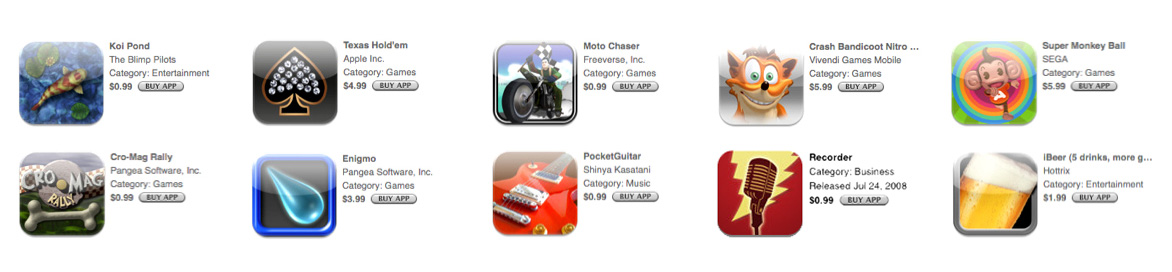
So those “three revolutionary products” were joined by a fourth one: a “handheld game console“. In December 2008 Apple announced the top 10 paid apps in the App Store, of those 10 the top 7 of them were games:

  1. Koi Pond2
  2. Texas Hold’em
  3. Moto Chaser
  4. Crash Bandicoot: Nitro Kart 3d
  5. Super Monkey Ball
  6. Cro-Mag Rally
  7. Enigmo
  8. Pocket Guitar
  9. Recorder
  10. iBeer
This image shows app icons from these 10 iPhone apps: Koi Pond, Texas Hold’em, Moto Chaser, Crash Bandicoot: Nitro Kart 3d, Super Monkey Ball, Cro-Mag Rally, Enigmo, Pocket Guitar, Recorder, iBeer.
These are a blast from the past!

One notable thing about the first iPhone that may seem odd now was that the camera was only a stills camera, no video support, no flash, no exposure compensation; not only that but the camera used a tiny 2 megapixel sensor. Prior to the iPhone release phones such as the 2006 Nokia N95 came with a 5MP camera, supported video and had a flash. So this aspect of the iPhone was really only providing the bare-bones, minimal requirements for taking photos. You definitely couldn’t add “Digital SLR quality camera” to that initial trifecta of devices that Steve introduced the iPhone with.

Fast-forward to 2024, the iPhone cameras have improved amazingly, the front-facing “selfie” camera alone on the iPhone 16 (first added with the iPhone 4) now takes 12MP photos and can shoot 4K video. Depending on which version of the phone you get two or three main cameras, with the iPhone 16 Pro sporting 48MP sensors with regular, ultra-wide and telephoto lenses. The iPhone is now one of the most popular cameras in the world, not just “phone cameras” but cameras in general. The iPhone, along with other smartphones, disrupted the camera industry3, even with the much poorer quality cameras in the earlier phones.

Whilst the camera(s) on the iPhone have been incrementally improving, year-over-year with each new model, this year sees an interesting new addition to both the regular and pro versions of the phone; the new “Camera Control” button. The Camera Control button is found on the side of the phone and is specifically for controlling the camera functions and provides a way to quickly access camera tools like exposure, depth of field and zoom4. The button is both a physical button and touch-sensitive control so you can press and slide sideways to navigate, adjust and select settings.
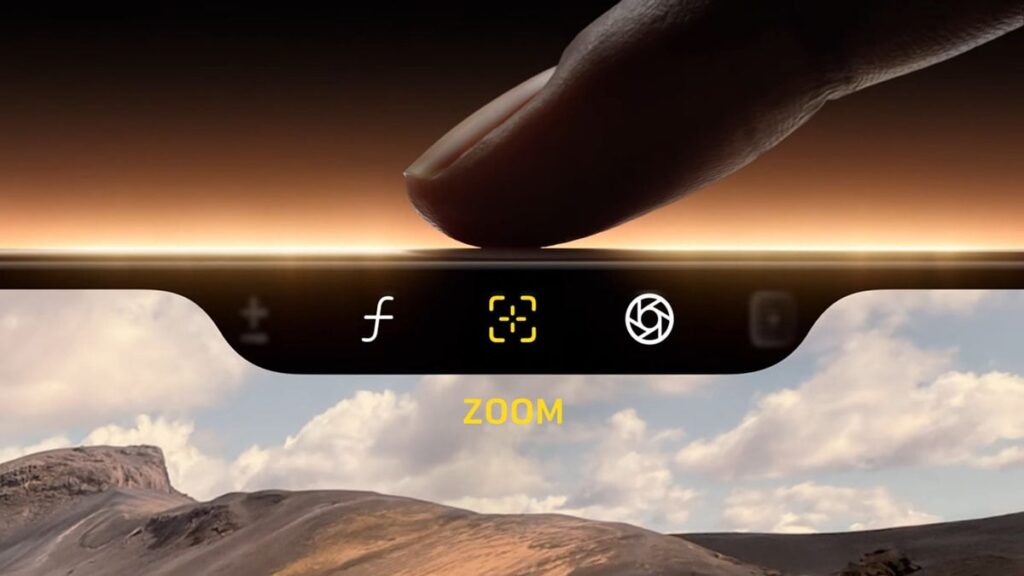
Apple has been touting their new “Apple Intelligence” AI-based features along with the release of these new phones, but I think the Camera Control is the most interesting feature on these new iPhones5. The camera has been an important feature of the iPhone for some time now and has become many people’s only camera that they use for taking photos and shooting video (even being used for making actual movies). But the addition of the Camera Control seems significant to me, in that Apple increasingly views part of its core functionality to be an actual camera, not just a phone with a camera on it.

So it seems that alongside the earlier addition of “handheld game console” to the initial three products that comprised the first iPhone we can now definitely add “High resolution mirrorless camera” to that list of “products” that makes up the iPhone.

Steve Jobs had a clear idea of the three core products that the iPhone was going to disrupt when he introduced the original iPhone, but I think the introductory slide would be something more like this had he envisaged gaming and photography becoming such a core function of the device6:
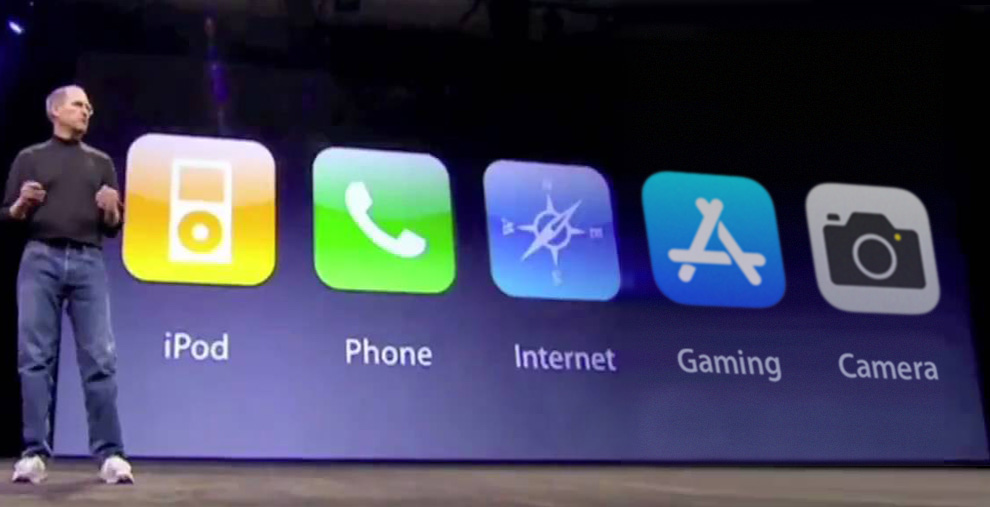
This image shows Steve Jobs on stage introducing the original iPhone with a slide saying "iPod", "Phone", "Internet" and the additions of "Gaming" and "Camera".

  1. MacStories wrote a good article looking back at the “sweet solution” back in 2018. ↩︎
  2. Ok, some might nit-pick that Koi Pond isn’t a game, but it’s definitely not a productivity app :) ↩︎
  3. Estimated to be an 87% drop in digital camera sales since 2010! ↩︎
  4. At the time of writing Apple has said additional functionality is coming in a future software update: “Camera Control will introduce a two-stage shutter that lets you automatically lock focus and exposure with a light press“. ↩︎
  5. Also, Apple Intelligence technically isn’t out at the time of writing, only with iOS 18.1 and subsequent point updates will it incrementally become available. ↩︎
  6. Is a “phone” still a core part of a smartphone device now? Arguably “internet communication” has replaced much of the traditional phone usage now. ↩︎


Stories

Stories can be either bacteria or light; they can infect a system, or illuminate a world.

Birds of Heaven, Ben Okri

I had forgotten what a great book “Birds of Heaven” by Ben Okri is. It is a short book focused on the power of words and also the role of storytelling in the world. I guess it contains stories about stories.

Nations and peoples are largely the stories they feed themselves. If they tell themselves stories that are lies, they will suffer the future consequences of those lies. If they tell themselves stories that face their own truths, they will free their histories for future flowerings.

PS5 Pro – Have games console prices jumped the shark?

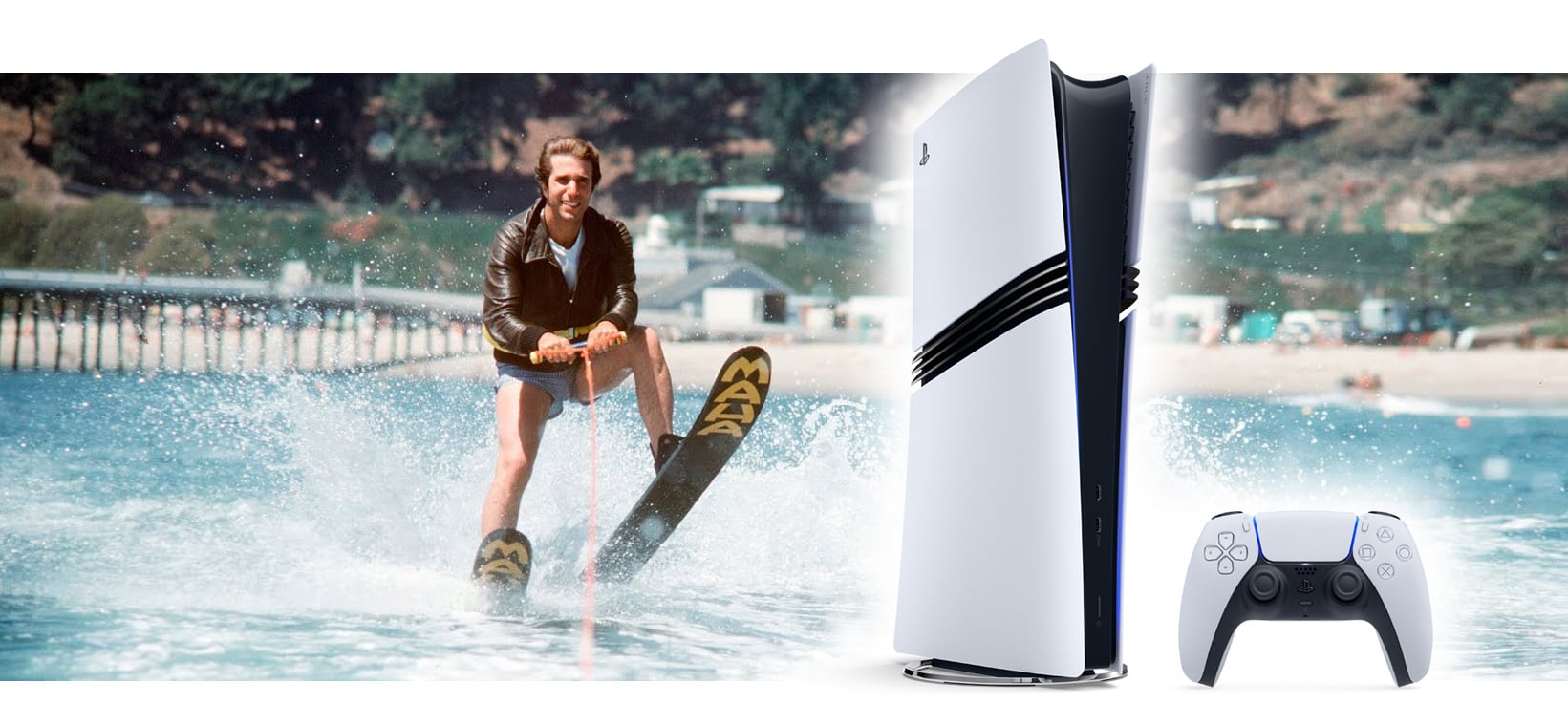
Sony recently announced the PS5 Pro games console which had been long rumoured and I, like many people it seems, was a bit shellshocked to see the price to be $699 / £699.

My initial reaction was definitely a bit incredulous (and I probably still am to be honest), but it did also give me pause to consider whether this price is actually as extremely high as it seems. I was curious about the relative costs of games consoles since the 1980s and whether the prices have always been priced relative to inflation. So after a bit of Googling and also a bit of querying via ChatGPT I came up with these approximate costs for a few consoles over the years:

ConsoleLaunch YearOriginal Price (USD)GBP Equivalent at LaunchInflation-Adjusted Price (2024)1
Atari 26001977$199£115£505
Nintendo Entertainment System (NES)1985$199£185£500
Sega Master System1986$200£133£350
Super Nintendo Entertainment System (SNES)1991$199£114£230
Sega Genesis (Mega Drive)1989$189£118£260
Sony PlayStation1995$299£187£330
Nintendo 641996$199£128£225
PlayStation 22000$299£200£310
Xbox2001$299£206£315
PlayStation 32006$499-$599£277-£332£425-£510
Xbox 3602005$299-$399£166-£222£245-£330
PlayStation 42013$399£257£300
Xbox One2013$499£322£370
Nintendo Switch2017$299£230£250
PlayStation 52020$499£384£390
Xbox Series X2020$499£384£390

So looking at those prices it does seem like the cost of the PS5 Pro isn’t so far above the rate of inflation. It’s also worth noting that the PS3 launched with a pretty high price that had similar reactions from people. Even so, the cost is quite a bit higher than people expected, and it does seem really expensive to me (and as many people have pointed out at that price it still doesn’t come with a disc drive by default).

So, why have Sony priced it this way? There are a couple of factors to consider. The first is a point a friend of mine made to me when discussing it, perhaps Sony looked at the fact that many people are happy to spend £700 – or way more – for the latest smartphone, and they might do that every 2 or 3 years or so on average. If people see the value in spending that money for a phone then surely £700 for an extremely powerful games console is worth it? I can certainly acknowledge that logic and it certainly did make me think again when my friend suggested that explanation.

The second factor is market trends and consumer willingness to spend. Over time the cost of consoles has gone up along with the technical capabilities of the consoles, additionally the price of AAA games for consoles has also increased. Prior to 2020 the average cost of a AAA game in the US was $59.99, after then this rose to $69.99 alongside special / collector’s editions priced from $70 up to $150 in some cases. Despite those high (very high in my opinion!) prices people still buy them, so market forces seem to dictate and support Sony’s price.

One reason cited for the high cost of AAA games is that consoles (Sony’s at least) are sold at a loss and the cost of these games offsets this. But perhaps now Sony is trying to charge closer to the actual cost of the PS5 Pro?

So there are certainly some valid reasons as to why the PS5 Pro should cost so much, but it is interesting to see how Sony’s competition prices their newer consoles. XBox Series S and X both show pretty good value for money, the S in particular can be purchased for around £200 and can basically play the same AAA games as the PS5 Pro. There is also the long rumoured Nintendo “Switch 2”, Nintendo doesn’t tend to care about the high end of gaming performance but instead is focused on making great playing games, albeit mostly with the same $60+ price tag.

Sony has generally been seen to be winning the current console wars (at least against XBox), but I wonder if the price of the PS5 Pro will end up further reinforcing the Nintendo Switch (or the upcoming sequel) as the most attractive option for more casual gamers?


  1. This inflation adjusted price is based on conversion of the USD amount rather than the actual UK cost. ↩︎

Recalling 9/11

I remember watching tiny embedded video streams from news channels and reloading web pages over slow dialup internet in my old office. Strange to think that there was no Facebook then, no Twitter, no iPhones. News websites were still the way to find out about breaking news.

It was strange to see all of those events taking place somewhere I’d visited on an art college trip just a few years prior.

Apple <-> elppA

Apple had their September “It’s Glowtime” keynote event yesterday announcing updated products like Apple Watch, AirPods and iPhones.

The new iPhone Pro phones have a new cinematic slow motion filming mode which records at 120FPS 4K video, they demonstrated this mode with a music video for the band “The Weeknd” where they had them sing the song at 4x so that when it is played at the slow motion 24FPS rate the vocals are played in realtime:

(There’s also another behind the scenes video with a bit more about how it was shot).

It reminded me of the video for the song “Drop” by The Pharcyde which was directed by Michel Gondry. The whole video was shot with them performing everything backwards, so the band had to learn to sing the words as they would sound in reverse so that when the video is played in reverse it looks like they’re singing normally, kind of wild!

(Here’s a link to watch the Pharcyde “Drop” video on YouTube in case the embed isn’t working properly).

Why are gig tickets so expensive these days?

I’ve seen a lot of discussion online in the last few years about the increasing price of gig tickets. Huge tours by artists like Taylor Swift and the current (at-the-time-of-writing) buzz about Oasis getting back together for a tour in 2025 have seen massive ticket prices along with high demand for tickets. But even for not-quite-so-massive artists gig prices are way higher now than they used to be.

Inflation obviously affects the prices of products and services etc and gigs are no exception, but why have gig prices risen from an average of £15-20 in the mid 1990s to the now £100+ (or way more!) that we see now? If you look back over that same period from the late 1990s to now there are some key factors to consider.

1999: Napster

Peer-to-peer file-sharing services like Napster allowed users to download and share music for free. This massively disrupted the traditional music business, lead to a significant decline in CD sales and revenue for artists and record labels.

Ok, it’s not 100% accurate to put the blame on Napster alone, but it is the poster-child of the peer-to-peer file sharing era. Within the two years after it was released in 1999 it grew to over 60 million users sharing files with one another. Napster technically was sued out of existence by the music industry by 20021, but by then there were many more P2P file sharing options available so the horse had bolted from the stable by that point.

2000s: Declining music revenue

With the spread of P2P file sharing and increasingly faster internet speeds consumers stopped buying physical albums as much, both artist’s and record label’s sales revenue plummeted.

In 2001 Apple released the iTunes music store and also the iPod. iTunes brought in a legitimate, easy way for people to buy digital music and was seen in many ways to be a much needed source of revenue for recording artists and record labels and a way to fight back against piracy with DRM protected audio tracks which were tied to people’s iTunes account and iPods.

iTunes definitely did help in many ways but even Steve Jobs recognised the futility of fighting against file sharing and published his “Thoughts on Music2 letter in 2007 calling for the four big music labels to licence their music without requiring DRM. The main argument being that DRM was really only making a hostile environment for legitimate music buyers and preventing them from playing music on their various devices, whereas users of file sharing had no such restrictions. The major record labels eventually conceded this point, and in 2009 iTunes started selling songs DRM-free.

Income from recorded music was still declining, so artists increasingly relied on live gigs, tours, and merch sales to make up for lost revenue. Gigs became a more central part of an artist’s income.

2010s: Streaming services

Pay-to-own digital music platforms like iTunes received competition from newer subscription based streaming platforms like Spotify. Instead of buying music outright people could pay a monthly fee and get access to a huge library of music, this provided similar access to music that people experienced when using P2P file sharing services (“I can play almost any song I can think of!”). Sales of individual tracks and albums decreased, in 2015 Apple responded to this change in consumer demand with the launch of Apple Music.

These streaming services provided legal and consumer-friendly alternatives to piracy, but the revenue to artists compared to physical sales was lower as it was on a per-stream basis3. So for many artists this further reinforced the need to tour more extensively as a way to try and bring in revenue.

2020s: A new “Era” of expensive gig tickets

An interesting side-effect of such widespread access to recorded music through streaming services is that it’s easy for people to hear any music they want, but this in turn has actually helped to increase demand to see artists performing live4. As such live performances are increasingly the primary source of income for artists.

As people’s desire to see live gigs has increased, sellers of tickets for live events have often used dynamic pricing models where ticket prices change based on demand. Additionally, options like VIP packages and other exclusive experiences provide other opportunities to charge a premium for tickets to live music events. The rise of online ticket resale platforms has enabled a secondary market leading to some of the even crazier ticket prices we’ve seen for gigs by some popular artists.

Look back (in anger?5)

You can draw a line from the de-valuation of recorded music that came with Napster / P2P file sharing to the present-day expensive ticket prices, it’s an interesting example of cause and effect / unexpected consequences. Napster set off a chain reaction that disrupted the music industry, transformed how artists earn money, leading to a greater dependence on live performances and the much higher ticket prices for concerts and gigs we see today.


  1. Napster still exists today as a paid streaming service. ↩︎
  2. Sadly no longer available on Apple’s Newsroom pages so this is linked to the original in the Wayback machine. You should take note Apple. ↩︎
  3. In 2024 Spotify pays approximately $0.003 – $0.005 per stream on average. ↩︎
  4. Tik-Tok also fuels this demand. ↩︎
  5. Sorry, I had to include at least one Oasis reference. ↩︎

Nokia N-Gage – another “Handheld Hero”

I posted an image of this on my Dribble account the other day along with a similar bit of writing, but I thought I’d should really add a blog post about it here too as it’s one of my favourite devices, plus I’m trying to write a bit more frequently on my blog again.

The Nokia N-Gage is one of what I call the “Handheld Heroes”, these are 12 handheld devices that I consider to be icons of their time and are symbolic of a particular point of technological change in the last 30 – 40 years (ok, the pencil is quite a bit older than that ?). The N-Gage was released around 2003, so over 20 years old at the time of writing this(!).

The N-Gage was an amazing device and in many ways was ahead of its time. Long before Pokemon Go was a thing Nokia explored the idea of location-based / location-aware games, but mobile connectivity was very limited, very slow and very expensive at that time. I recall thinking about how amazing it would be to be able to walk around with a device and have a constant connection to the internet, but it was a long way off from the ubiquity of 4G / 5G today. So whilst there were a few location based games for the N-Gage this lack of affordable mobile data meant it had limited appeal.

Nokia Push was one of the coolest initiatives that they tried, basically there were two aspects, one for skateboarding and one for snowboarding. Both involved using sensors attached to the skateboard or snowboard and then tracking the telemetry such as rotations, flips, height, speed etc. For skateboarding the intention was that you could compete with someone in a different location in the world, both skaters could see from their phones which tricks the other had done:

Nokia Push skateboarding promo video

For snowboarding the intention was to track telemetry such as height, speed, rotations, impact etc:

Nokia Push snowboarding promo video

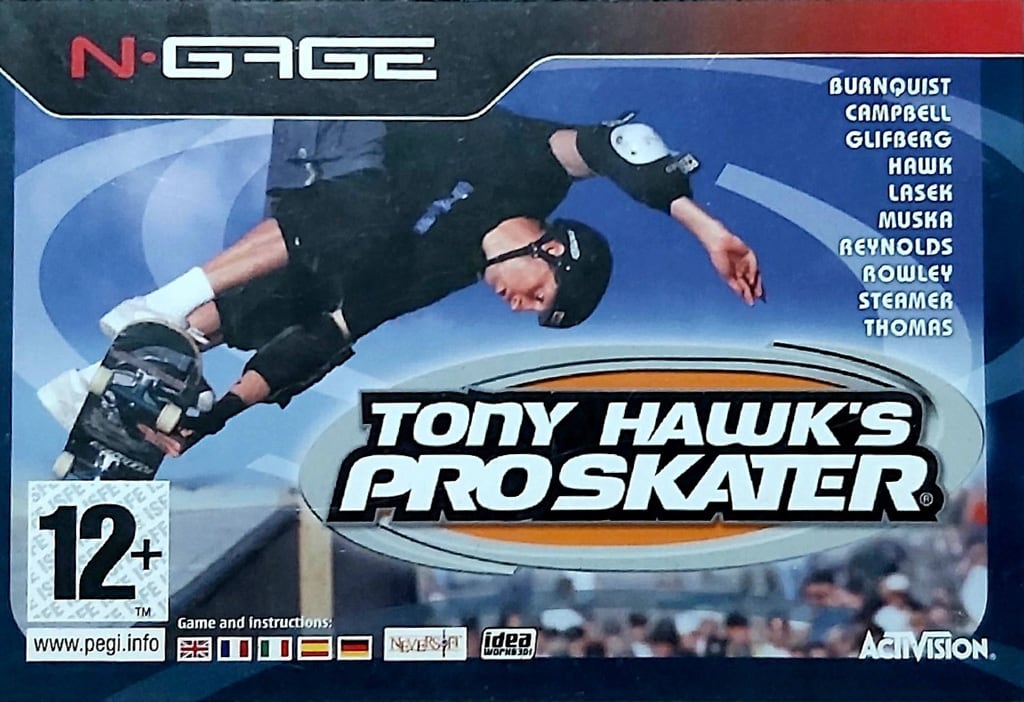
So the N-Gage wasn’t successful in location based gaming but it definitely had some of the seeds of what was yet to come, Nokia Push explored that even further. Yep, the N-Gage was a weird device to make calls on (especially the first version, see “Sidetalking!“), but talking was not what was really intended for, and I loved mine. What’s not to love about a phone that can play Tony Hawk’s Pro Skater?

Is it Cake?

It’s interesting seeing the speed at which “AI” based generative media has been developing over the last few years, Midjourney, Stable Diffusion etc. OpenAI recently announced “Sora”, their new text-to-video AI model which can generate videos up to one minute long.

The example videos in their showreel video on YouTube are pretty impressive, go take a look if you haven’t done so already:

There’s definitely a bit of an “uncanny valley” quality about some of them though. They made me think of the Netflix series “Is it Cake?” where contestants have to make a cake that looks like a real object with the aim of fooling the judges who have to try and pick the fake cake-based item out of a lineup with three other real versions of the object.

This image shows several tool bags on plinths, one of the tool bags is actually a cake made to look like a real tool bag.

These cake-versions of real objects most-often look incredible and are created using amazing cake-making techniques and edible materials, they really do look like amazing realistic edible sculptures.

In the show the judges are not allowed to go close up to view the objects but can only view them from about 15-20 feet / 4.5-6 metres away. At that distance it is much harder to notice the subtle inconsistencies, e.g. not-so-straight edges or odd surface textures (or smell!) that might give away the illusion. But if they were allowed to go close up then the illusion would likely be much more apparent.

This image shows three people standing next to podiums, the people are judges on the Netflix show "Is it cake?"

It feels a bit like this with a lot of generative AI content too, looking at it broadly – especially on a small device screen – they do look incredible, but if you look closer and carefully you can spot some of the same not-so-straight edges and / or unusual textures (and sometimes extra fingers / legs!) that makes you think, “That’s a cake!“.

Over time though I’m sure it is going to get increasingly more difficult to tell the difference between these and real images / video as the subtle giveaways such as soft / fuzzy edges and extra limbs are reduced. However, even with the current issues it does already present a big challenge when it comes to evaluating the authenticity of the images and videos we see online.

OpenAI does make a clear statement when it comes to the “safety” of their tools and aims to prevent them from being used to create content that is hateful or contains misinformation, but the challenge will be when these types of models become more widely accessible by companies / organisations who don’t hold to these higher standards. It’s certainly going to be a bit of a wild west out there.


(Some of the AI stuff also reminded me of this old “Mr Soft” TV advert for Trebor mints too!).

Happy 40th Birthday to the Macintosh!

I first used a Macintosh when I went to college in 1989, I had just left school and started an art & design course. The college was a little behind in technology so even though it was 1989 and there were some more modern Macs these machines were a bit older so probably SE’s and SE30’s. Even though they were old these were amazing, I remember using MacPaint to draw with the various tools and then printing it out on the Apple LaserWriter printer. In hindsight it is obviously so low-tech compared to now but it was incredible.

Prior to using the Mac I had used computers at home, as far back as about 1981 we had a Commodore Vic 20 and then a Commodore 64. So I had tried doing things on those, entering programs in from computer magazines and attempting to write BASIC programs myself. I remember thinking at one point that it would be great if there was an easier way to work with computers, nothing specific but just that entering text into programs seemed hard and long-winded. So when I first used a Mac in 1989 it was a bit like a light came on and it all made so much sense that this is how computers should work.